Dreaming about a little more elbow room near Three Forks? Acreage can offer privacy, views, and flexibility, but it also comes with questions that do not always show up when you buy a home in town. If you are starting your search, a little due diligence early can save you time, money, and stress later. Here’s what to check before you tour land or fall in love with a property.
Start With Jurisdiction and Zoning
One of the first things to confirm is where the parcel actually falls from a planning standpoint. Land near Three Forks may be inside city limits, within the city’s 1-mile zoning jurisdiction, or outside that area under Gallatin County jurisdiction.
That matters because the rules can change depending on location. Three Forks says its Zoning & Planning rules apply within city limits and within the 1-mile jurisdiction outside them, while Gallatin County handles zoning outside city limits and requires land use permits in all zoning districts.
Before you go too far, verify the parcel’s exact jurisdiction, zoning status, and any recorded covenants. Gallatin County recommends checking zoning sub-district rules like minimum lot width, lot area, and allowed density, along with recorded covenants through the Clerk and Recorder.
Why This Step Matters
If you are buying acreage for a specific use, this step is especially important. The parcel may look perfect on paper, but zoning rules or recorded restrictions could affect what you can build, how the land can be used, or how it can be divided in the future.
This is one of the biggest reasons acreage purchases need a more detailed review than a typical in-town purchase. You are not just buying space. You are also buying the rules that come with it.
Check Floodplain Status Early
If a property is inside Three Forks city limits, floodplain status deserves a close look. The city states that much of the city is within the FEMA-mapped 1% chance flood area.
The city also requires floodplain permits before manmade improvements in AE zones. If you are thinking about building, adding structures, or making other improvements, this could affect your plans and timeline.
Utilities Can Make or Break a Parcel
Acreage buyers often focus on views, boundaries, and building sites first. In reality, utilities and access are usually the bigger questions.
Inside city limits, Three Forks provides water and sewer services. Property owners are still responsible for the pipes, fittings, and connections on their own property and from the property to the city mains.
The city also points new residents to Northwestern Energy for gas and electricity. Garbage service is available through licensed providers, and internet service can vary, with some areas relying on satellite and others on hard-wired options.
Rural Utility Questions to Ask
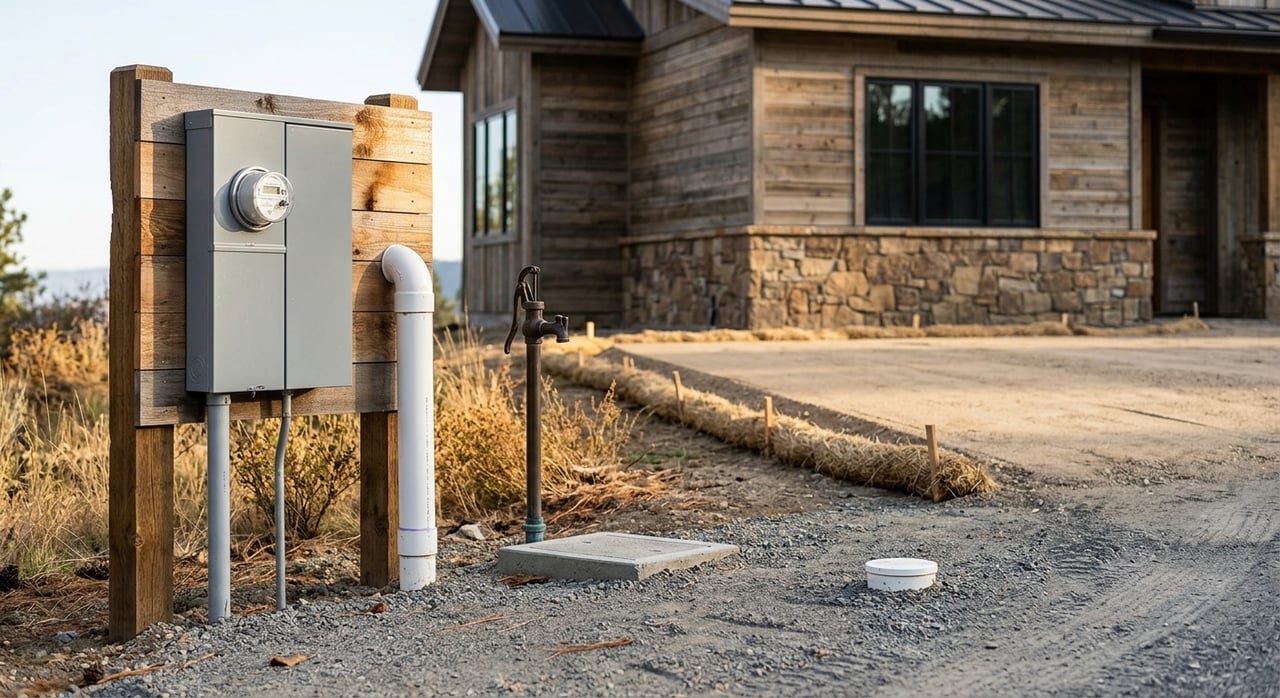
If the parcel is outside town, confirm whether it is served by municipal utilities or will need private solutions. That can affect both upfront costs and long-term maintenance.
Before you spend much time touring, ask:
- Is water available through city service or will you need a well?
- Is sewer available or will the property need septic?
- Is power already nearby?
- What internet options are actually available at the parcel?
- Are there recorded easements for utilities?
Access Is More Than a Driveway
With acreage, access is not just about whether you can physically reach the property on a sunny day. You also want to know whether access is legal, recorded, and practical year-round.
Gallatin County subdivision rules require legal and physical access to each parcel. They also require easements where needed for utilities and access, and they ask whether year-round access by conventional automobile will be available over legal rights-of-way.
Road Maintenance Matters
Road responsibility is a major part of rural ownership. County subdivision rules say interior subdivision roads and bridges remain the subdivision’s maintenance responsibility unless the county accepts them into the county road system.
If the county has not accepted the road, maintenance and snow removal may fall to a homeowners association, road association, or property owners themselves. That is something you want to understand before closing, not after the first winter storm.
Gallatin County Road & Bridge also notes that county-maintained road work is not allowed in winter after Oct. 31 except for emergencies. The county also places 16-ton weight limits on some roads in spring and early summer to protect road surfaces.
Wells, Septic, and Water Rights Need Separate Review
One of the biggest misunderstandings with rural property is assuming that a well automatically means the water side is fully handled. In Montana, wells, septic systems, and water rights each need their own verification.
Gallatin County Environmental Health handles septic permits. The Montana DEQ subdivision review program focuses on sanitation facilities, including water supply, sewage disposal, solid waste disposal, and storm drainage.
Do Not Confuse a Well Log With a Water Right
DNRC states that a driller files a Well Log Report with the Montana Bureau of Mines and Geology within 60 days, but a well log is not a water right. In many cases, owners still need to file a Notice of Completion of Groundwater Development to establish a water right for the well.
DNRC also recommends checking the Water Right Query System by geocode and looking for rights appurtenant to the property, not just under the current owner’s name. That extra step can help you confirm what is actually tied to the parcel.
2026 Groundwater Rule Change
Starting Jan. 1, 2026, DNRC says people using the groundwater permit exception generally must submit a Notice of Intent to Appropriate Groundwater before putting the water to use. Then, a Notice of Completion must be submitted within 60 days after the use begins.
If you are buying vacant land or newer rural property, this is an important item to verify during due diligence. It is one more reason to ask detailed questions before you make an offer.
Records to Request
Before touring seriously or moving forward on a property, ask for:
- The well log
- Any water-right paperwork
- Septic permit records
- Septic approval history, if available
Covenants and Agreements Can Shape Ownership
Acreage often comes with more paperwork behind the scenes than buyers expect. Recorded covenants, CCRs, road agreements, and maintenance obligations can all affect how you use the property and what responsibilities come with ownership.
Gallatin County notes that recorded covenants matter on rural properties, and county-required covenants must be clearly separated when they are imposed through subdivision approval. In practical terms, that means these documents should be treated as part of the property itself, not as fine print.
What to Watch For
As you review documents, look for obligations tied to:
- Road maintenance
- Shared access
- Utility easements
- Use restrictions
- Property upkeep requirements
These items can shape both your monthly costs and your day-to-day experience of owning the land.
Plan for Ongoing Land Stewardship
Owning acreage near Three Forks can be rewarding, but it also comes with long-term responsibilities. Two that buyers sometimes overlook are weed management and open burning rules.
Gallatin County’s weed district requires a weed management plan before construction or other disturbance in development settings. The signed plan is a binding agreement, and the district also offers support like roadside maintenance, cost-share help, sprayer rental, and inspection assistance.
Gallatin County also regulates open burning. Burn season runs from March 1 through Nov. 30, and an annual burn permit must be purchased and activated.
A Simple Pre-Tour Acreage Checklist
Before you spend too much time touring properties, it helps to narrow the list with a few practical questions. The farther you get from city services, the more important these details become.
Use this checklist as a starting point:
- Confirm the exact jurisdiction and zoning
- Ask for recorded covenants and road-maintenance documents
- Verify legal and physical access
- Check for utility and access easements
- Ask whether year-round access is available
- Request septic permit records
- Request the well log and water-right paperwork
- Check floodplain status if the property is in or near city limits
- Ask about weed management obligations
- Review road conditions and seasonal limits
Why Early Due Diligence Pays Off
The biggest tradeoff with acreage is usually simple. More space often means more systems, more variables, and more homework.
That does not mean buying acreage near Three Forks is harder than buying in town. It just means the smartest buyers start with the practical questions first, so they can focus their search on properties that truly fit their goals.
If you are considering land or acreage near Three Forks, having a local guide can make the process feel much clearer. When you are ready to talk through property types, rural considerations, and what to watch for in this market, connect with Bronda Bowery.
FAQs
What should you verify before buying acreage near Three Forks?
- Start by confirming jurisdiction, zoning, recorded covenants, legal access, utility availability, septic records, well information, and water-right paperwork.
Why does jurisdiction matter for land near Three Forks?
- A parcel may fall within Three Forks city limits, the city’s 1-mile zoning jurisdiction, or Gallatin County jurisdiction, and each can involve different planning and land-use rules.
Do rural properties near Three Forks always have city utilities?
- No. Some parcels may have access to city water and sewer, while others may need private systems such as a well and septic.
Is a well log the same as a water right in Montana?
- No. DNRC states that a well log is not a water right, so buyers should review both the well records and any related water-right documentation.
What road issues should you check when buying acreage in Gallatin County?
- You should verify legal and physical access, year-round usability, easements, and who is responsible for road maintenance and snow removal.
Are there ownership obligations beyond the land itself on acreage parcels?
- Yes. Depending on the property, you may need to follow recorded covenants, road agreements, weed management requirements, and county burn permit rules.