Buying land near Townsend can feel like the perfect next step, right up until you realize how many moving parts sit between raw acreage and a finished home. If you are dreaming about space, views, or a more rural lifestyle in Broadwater County, you also need a clear picture of access, water, septic, and local review before you write an offer. This guide will walk you through the key issues to check so you can move forward with more confidence. Let’s dive in.
Start With Jurisdiction
One of the first questions to answer is where the property actually falls from a local government standpoint. A parcel near Townsend may be inside city limits, in county jurisdiction, or close enough to town that city review still becomes part of the process.
The City of Townsend provides water, sewer, and garbage pickup within the city, and it has adopted building codes, uses zoning, and has a building inspector. In the county, Broadwater County subdivision regulations control land division in the county’s jurisdictional area.
If a proposed subdivision is within one mile of Townsend, the county must send the preliminary plat to the city for review and comment. If a parcel lies partly inside the city, both the city and the county must approve it. That makes the property map more than a formality. It can affect your timeline, utility options, and approval path.
Know What “Subdivision” Means
Many buyers assume they can buy one large tract and split it later with a simple deed change. In Broadwater County, that may not be the case.
County rules define a minor subdivision as five or fewer lots and a major subdivision as six or more lots. If your long-term plan includes creating multiple homesites, building for family, or holding part of the land for future division, it is smart to understand early whether subdivision review will be required.
That matters because the legal path from one parcel to several buildable lots can involve more time, more documents, and more cost than buyers expect. A great piece of land can still be a great fit, but only if the numbers and process line up with your goals.
Access Is More Than a Driveway
A parcel can look easy to reach on a map and still have real access issues. Before you close, you want to confirm both physical access and legal access.
Broadwater County subdivision rules require proper access, needed easements, road coordination, and utility easements. Applications may also need approach, access, or encroachment permits, along with road plans, profiles, and sometimes a road maintenance agreement.
The county buyer guide also warns that some easements may not be recorded. That is a big reason to verify title, easements, and driveway access before you commit.
Questions to ask about roads
- Is the road public, private, or county-maintained?
- Is there a recorded access easement?
- Will you need an approach or encroachment permit?
- Is there a road maintenance agreement?
- Who pays for upkeep, snow removal, or repairs?
One especially important detail in Broadwater County is that the current subdivision regulations say the county will accept no new roadways for maintenance. If the land is served by a private road, you should plan on owner maintenance unless a separate agreement or HOA structure says otherwise.
Water Can Shape the Whole Plan
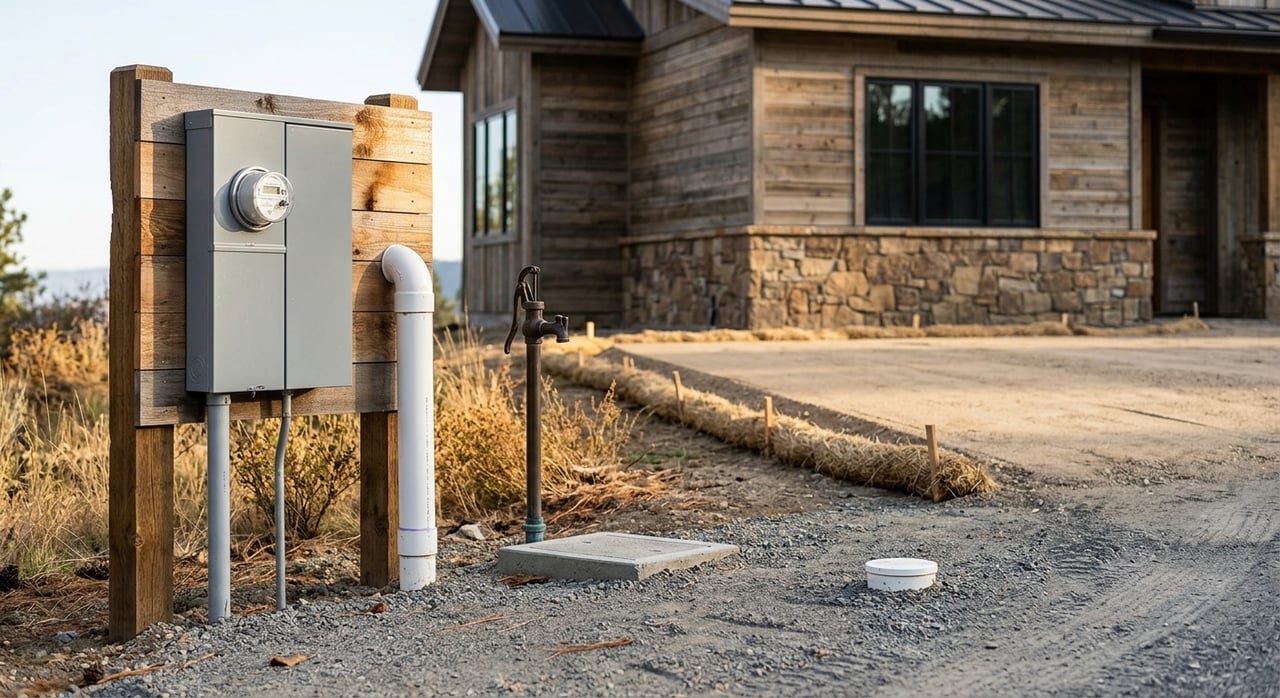
For many land buyers near Townsend, water is the biggest surprise. Outside Townsend city limits, municipal sewer service is only available within the city, and most rural residents rely on individual or shared wells. Electric service is also not available in all areas, which can affect both timeline and cost.
Montana DNRC says all water uses starting after June 30, 1973 require a water right. Groundwater uses over 35 gallons per minute or 10 acre-feet per year require a permit rather than an exemption.
Exempt wells are limited to 35 gallons per minute or less and 10 acre-feet per year or less. Starting January 1, 2026, new exempt well uses must file a Notice of Intent before using the water, and DNRC reviews a correct and complete NOI within 10 business days. An authorized NOI remains good for five years.
DNRC also warns that combined appropriations from the same source can push a project out of the exempt-well category. If you are looking at land with more than one planned home, shared use, or future division potential, that point becomes especially important.
What to verify about water
- Is the property on city water or will it need a well?
- Is there an existing water right tied to the parcel?
- Are there DNRC records or a Notice of Intent already in place?
- Could the planned use exceed exempt-well limits?
- Are there ditches, springs, or irrigation features on the land?
If the property includes surface water or irrigation features, county subdivision rules require existing water rights to be identified and in some cases reserved, transferred, or severed during the plat process. On acreage with ditches, springs, or irrigation supply, that is not a small detail.
Septic Feasibility Matters Early
A beautiful parcel still needs a workable wastewater plan. Outside the city, that usually means checking septic feasibility before assuming the land is ready for a home.
Broadwater County subdivision regulations require DEQ approval as a condition of final plat approval for parcels under 20 acres. For parcels of 20 acres or more, the subdivider must show an adequate water source and at least one septic area plus a replacement drain field at preliminary plat.
The county septic permit application also says a site evaluation is required if the property is over 20 acres or does not already have a DEQ Certificate of Subdivision Approval. In practical terms, that means larger acreage is not automatically simpler. It just follows a different review path.
The county buyer guide notes that advanced septic systems can exceed $20,000. That is one reason experienced land buyers budget for testing and design before they budget for finishes.
Utilities May Cost More Than Expected
Many buyers focus on the land price and the future house, but utility extension is often where budgets start to stretch. The county buyer guide flags tie-in fees, trenching, material costs, and easements as possible cost drivers.
It also notes that service available today may not be available when you are ready to build. If electric service is nearby, that is helpful, but you still want to know the cost and timeline to bring it to your exact building site.
When you compare parcels, try to compare the total path to a homesite, not just the asking price. A less expensive lot can become the more expensive choice once utility work, road improvements, and site prep are added in.
Streams, Slopes, and Floodplain Issues
Not every challenge is visible during a quick showing. Broadwater County may find land unsuitable for subdivision if hazards include flooding, snow avalanches, rock falls, landslides, slopes over 25 percent, wildfire risk, high water table, polluted or non-potable water, or floodway issues.
Floodway land may not be subdivided for building or residential purposes if it would increase flood hazards. That makes topography, drainage, soils, and floodplain review well worth the upfront cost.
If the property includes a stream or spring, there may be another layer to check. Broadwater Conservation District says work that may alter stream beds or banks requires a 310 permit before the project starts.
Expect the Timeline to Depend on Details
There is a formal county review structure, but the full timeline to go from raw land to ready-to-build often depends on the property itself. Surveys, water planning, septic review, access work, and utility coordination can all affect the pace.
Broadwater County’s regulations call for a preapplication meeting within 30 days of request. After submission, there is a 15-working-day sufficiency review.
From there, the county has a 30-working-day decision window for administrative minor subdivisions and a 60-working-day decision window for major subdivisions, or 80 working days for proposals with 50 or more lots, once the application is found sufficient. Even so, those review windows are only one part of the bigger process.
Build a Smarter Land Budget
When you buy raw acreage near Townsend, it helps to think beyond the purchase price. Your real budget should cover the work needed to make the property function as a homesite.
Budget items to plan for
- Survey and title work
- Access review and easement verification
- Road or driveway improvements
- Well planning and water-right steps
- Septic design, testing, and permitting
- Utility extension and trenching
- Floodplain, drainage, or slope review if needed
- A contingency for redesign, mitigation, or unexpected site costs
That kind of planning does not make the process less exciting. It makes it more realistic, which usually leads to better decisions and fewer surprises.
Questions to Ask Before You Offer
If you are serious about a parcel near Townsend, these are the questions worth asking before you move forward:
- Is the property inside Townsend city limits, in county jurisdiction, or within the nearby city-review area?
- Does title show legal and physical access?
- Are road and utility easements recorded?
- Is the road private or maintained by a public entity?
- Is there a road maintenance agreement?
- What is the water plan: city service, shared well, exempt well, or permitted water right?
- Are DNRC water records already tied to the parcel?
- Is septic feasible, and has there been DEQ or county review already?
- Are there streams, floodplain, steep slopes, wildfire issues, or drainage concerns?
- Do covenants, deed restrictions, or HOA rules limit uses, animals, or road upkeep?
A good land purchase is rarely about one perfect answer. It is about understanding the full picture before you commit.
Why Local Guidance Helps
Buying land in the Townsend area can be incredibly rewarding, but it also asks more of you than buying a typical in-town home. You are not just evaluating location and price. You are evaluating process, infrastructure, and future build costs.
That is where local, detail-minded guidance can make a real difference. When you understand the questions to ask up front, you are in a much better position to choose land that fits your plans instead of land that changes them.
If you are thinking about buying land near Townsend and want a calm, practical guide through the process, Bronda Bowery would love to help you make a smart move.
FAQs
What should you check before buying land near Townsend, Montana?
- You should confirm jurisdiction, legal and physical access, road maintenance, water options, septic feasibility, utility availability, and any floodplain, slope, stream, or covenant issues before writing an offer.
Does raw acreage near Townsend always allow an easy parcel split?
- No. In Broadwater County, dividing land into multiple lots may trigger subdivision review, and the process depends on how many lots are proposed and where the parcel is located.
Can you use city water and sewer on land outside Townsend city limits?
- In general, the City of Townsend provides water and sewer inside the city, while rural properties outside city limits often rely on wells and on-site wastewater systems.
What water rights issues matter when buying land in Broadwater County?
- You should verify whether the parcel has existing water rights, whether a planned well fits exempt-well limits, and whether DNRC records or a Notice of Intent apply to the property.
How important is road access for a land purchase near Townsend?
- Road access is critical because you need to confirm both legal access and physical access, along with any easements, permits, and road maintenance responsibilities tied to the parcel.
Do septic costs affect land-buying budgets near Townsend?
- Yes. Septic feasibility should be checked early, and the county buyer guide notes that advanced septic systems can exceed $20,000, which can significantly affect your total budget.
Are streams or floodplain issues a concern for Townsend-area acreage?
- They can be. Flooding, floodway limits, steep slopes, high water table, and stream-related permit requirements can all affect whether and how a parcel can be built on.